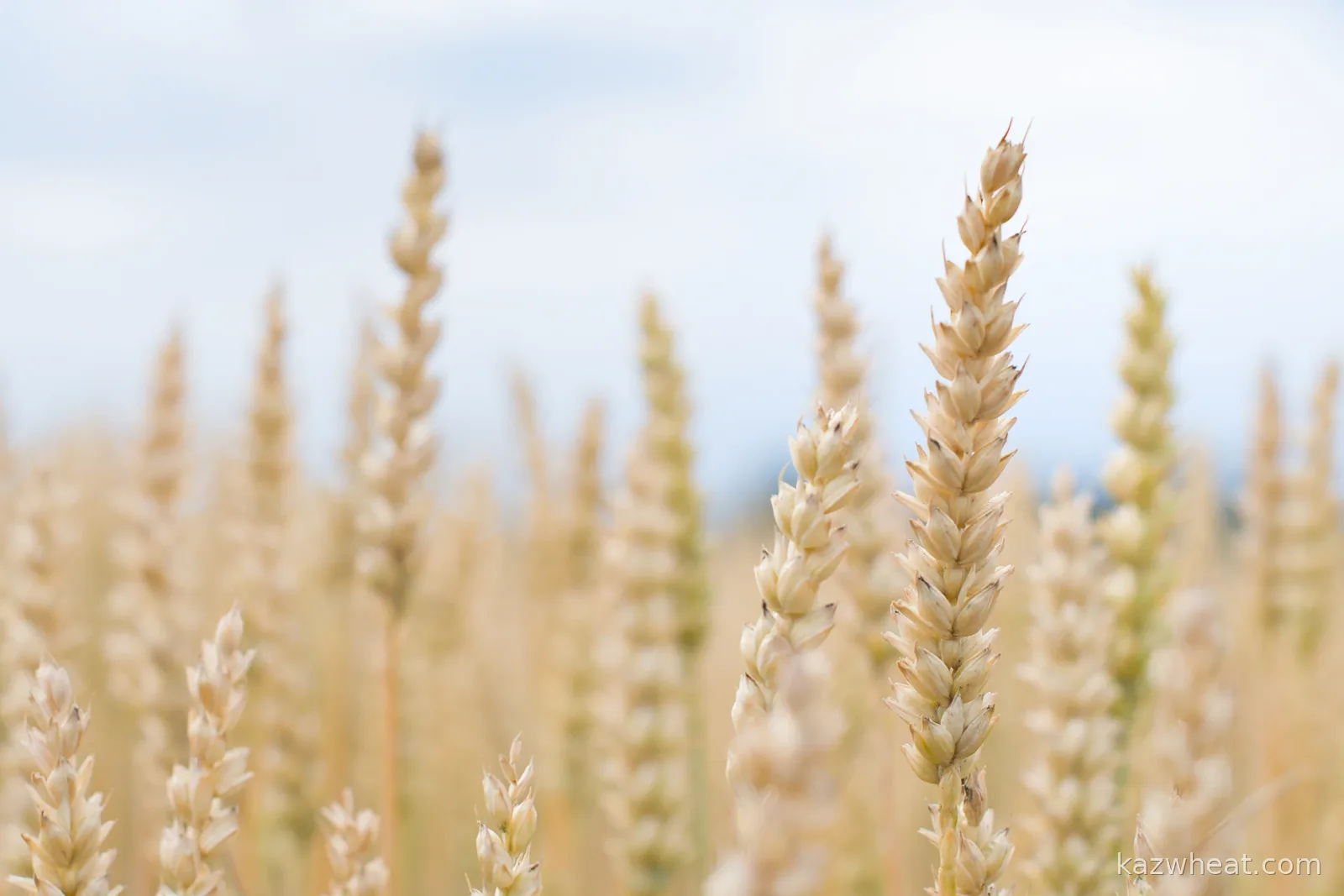
01May
Sowing
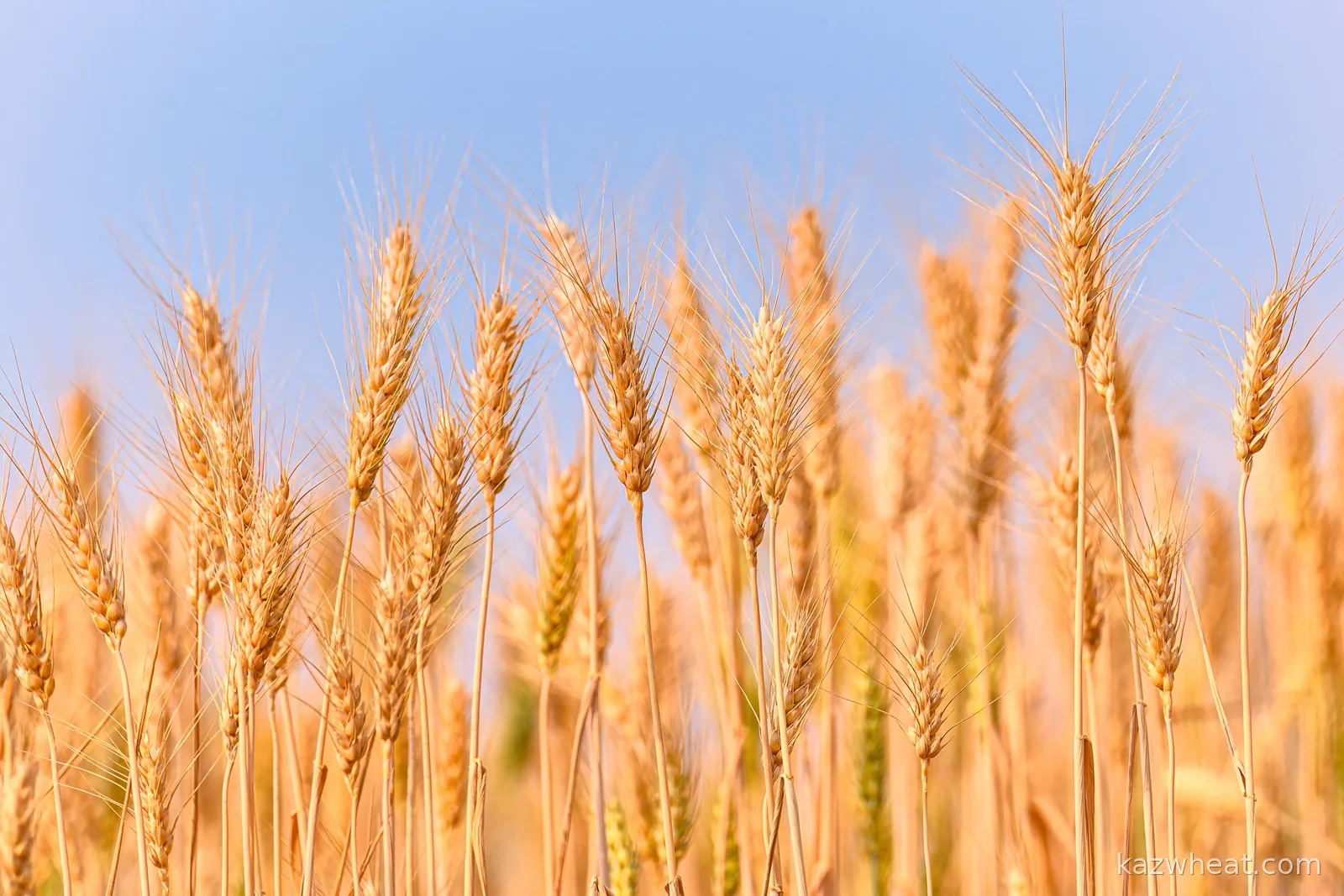
Spring wheat goes into the ground once the steppe has thawed and dried, usually from mid-May into early June.
Kazakhstan's wheat industry, explained
Discover the wheat, the regions and the trade networks connecting Kazakhstan with global markets.
Drag through the wheat to leave a wake. Click to send a wave across the field.
Scroll to explore01 / The season in numbers
15.8Mt
Wheat production forecast for 2026/27
9.5Mt
Wheat export forecast for 2026/27
19.3Mt
The 2025/26 harvest, second only to 2011/12 in USDA records since 1987
11.3M ha
Wheat area expected to be harvested in 2026
Mt = million tonnes. Source: USDA Foreign Agricultural Service, PSD, November 2026 update. Forecasts change through the season. Last checked .
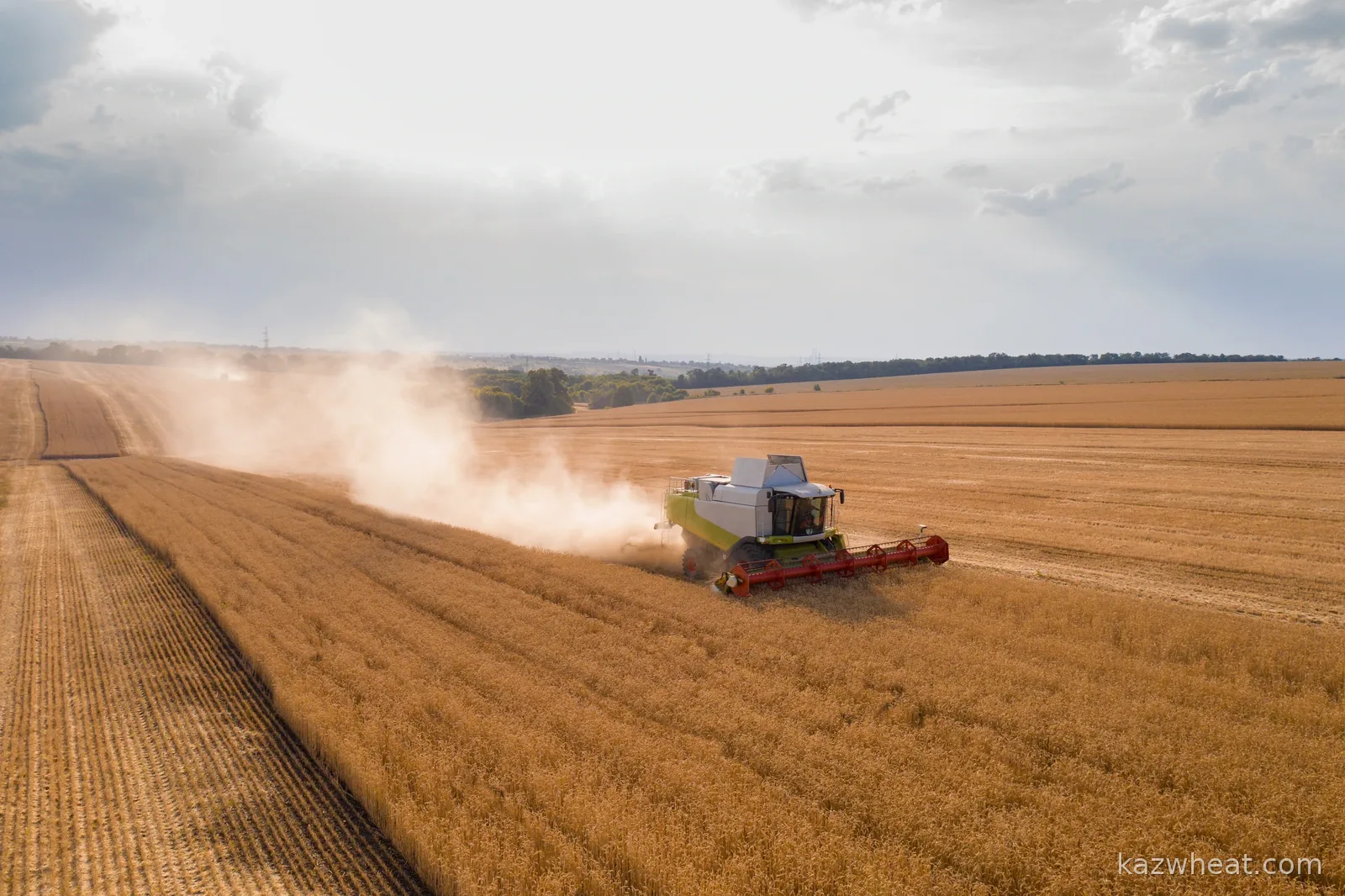
02 / Why Kazakhstan
The open plains of Kazakhstan provide the setting for one of Eurasia's important grain industries. Explore the geography, farming methods, infrastructure and economic forces that shape wheat production throughout the country.
The largest landlocked country on Earth. Every tonne it sells abroad travels by rail or across the Caspian Sea before it reaches a port or a border.
Spring wheat country. About 95 percent of the wheat area is spring wheat, sown in May and harvested from late August.
A northern grain belt. Kostanay, Akmola and North Kazakhstan grow more than three quarters of the country's wheat.
Spring wheat and regional shares: USDA FAS crop analysis.
03 / The grain belt
Kazakhstan is the ninth-largest country in the world, stretching from the Caspian Sea to the Altai mountains.
Kostanay, Akmola and North Kazakhstan form the heart of the grain belt. Average wheat area, 2015 to 2024: Akmola 3.92, Kostanay 3.65 and North Kazakhstan 2.53 million hectares.
Uzbekistan is by far the biggest buyer of Kazakh wheat, followed by Afghanistan and Tajikistan. Wheat also goes east into China and west across the Caspian.
Wheat exports by destination, 2024/25 marketing year: USDA FAS GAIN KZ2026-0003. Regional areas: Agriculture (MDPI), 2026. Routes are schematic.
04 / Market data
Kazakhstan's wheat crop has ranged from 9.6 million tonnes in 2010/11 to 22.7 million in 2011/12. Use the switch to compare what was grown, what was exported and what was used at home.
| Marketing year | Production | Exports | Domestic use |
|---|---|---|---|
| 2010/11 | 9.64 | 4.86 | 6.7 |
| 2011/12 | 22.73 | 11.84 | 7.6 |
| 2012/13 | 9.84 | 6.29 | 6.8 |
| 2013/14 | 13.94 | 8.1 | 6.8 |
| 2014/15 | 13 | 5.54 | 6.8 |
| 2015/16 | 13.75 | 7.41 | 6.9 |
| 2016/17 | 14.98 | 7.41 | 6.9 |
| 2017/18 | 14.8 | 9 | 6.9 |
| 2018/19 | 13.95 | 8.3 | 6.6 |
| 2019/20 | 11.45 | 6.99 | 6.1 |
| 2020/21 | 14.26 | 8.19 | 6.25 |
| 2021/22 | 11.81 | 8.11 | 6.2 |
| 2022/23 | 16.4 | 10.87 | 6.8 |
| 2023/24 | 12.11 | 7.83 | 7.55 |
| 2024/25 | 18.58 | 10.19 | 9 |
| 2025/26 | 19.33 | 11.6 | 9.55 |
| 2026/27 | 15.8 | 9.5 | 8.28 |
05 / The wheat year
01May
Spring wheat goes into the ground once the steppe has thawed and dried, usually from mid-May into early June.
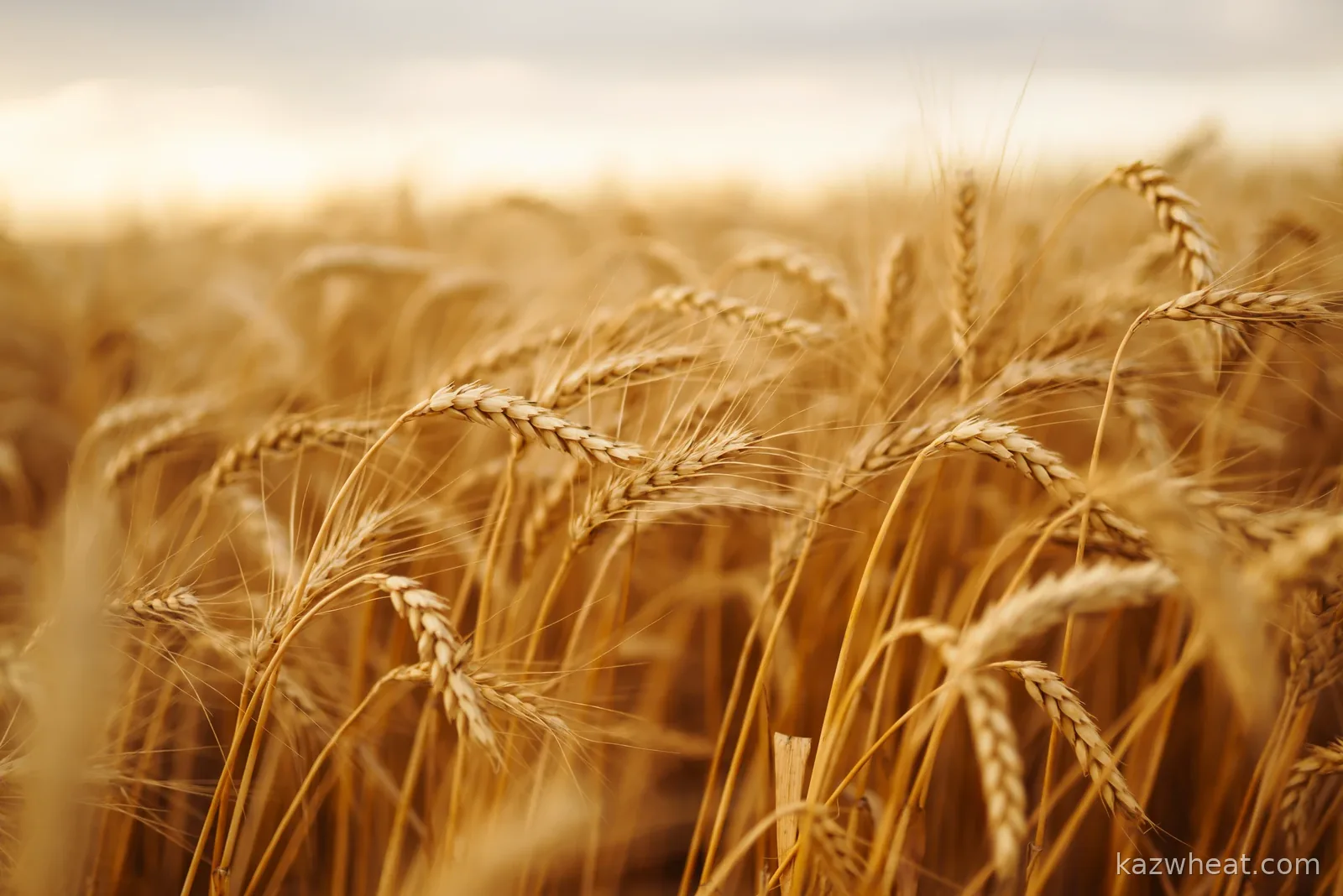
02June to August
A continental summer brings long days and heat. How much rain falls in June and July does much to decide the size of the crop.
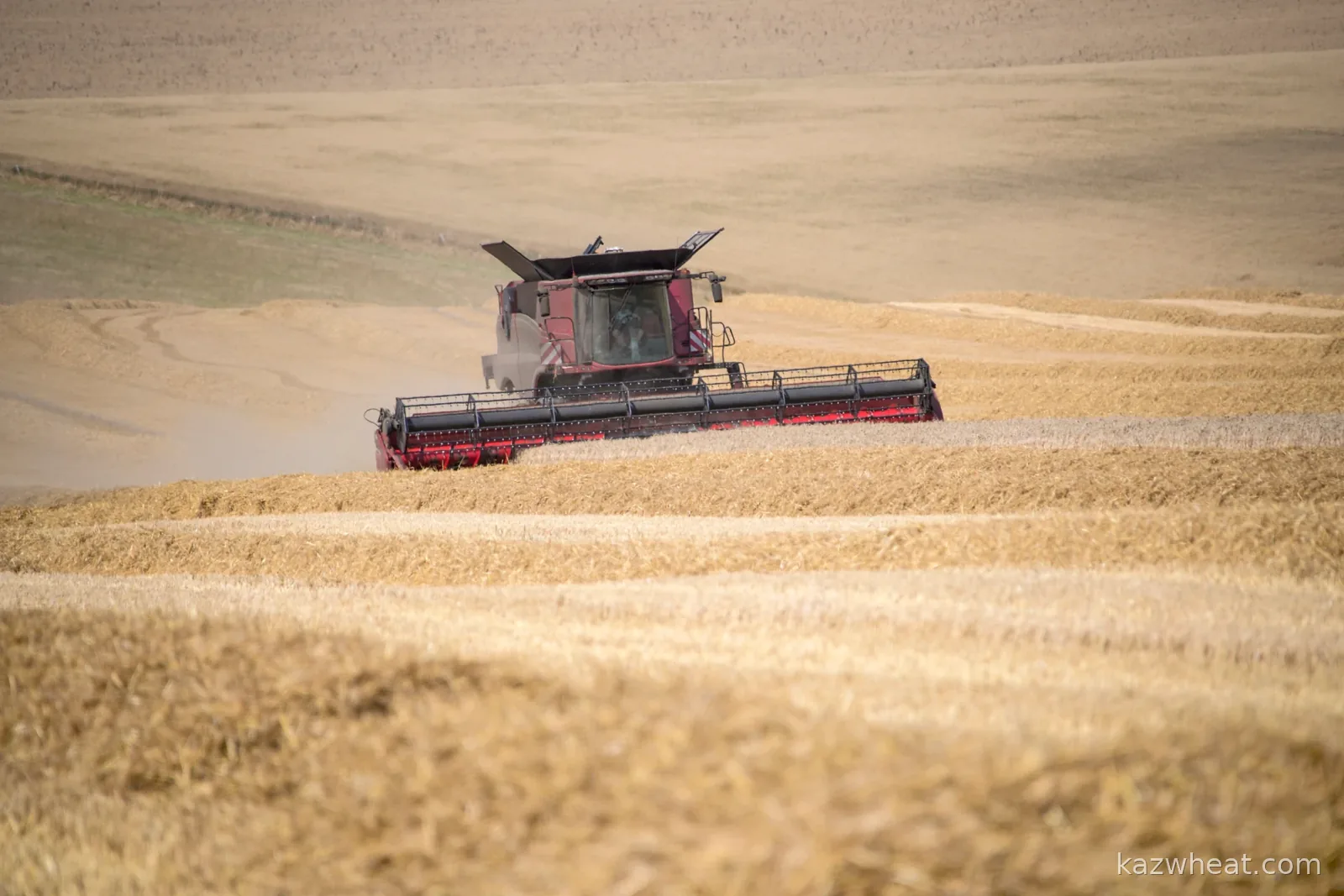
03Late August to October
Combines move across the northern fields from late August. A wet autumn can stretch the harvest into October.
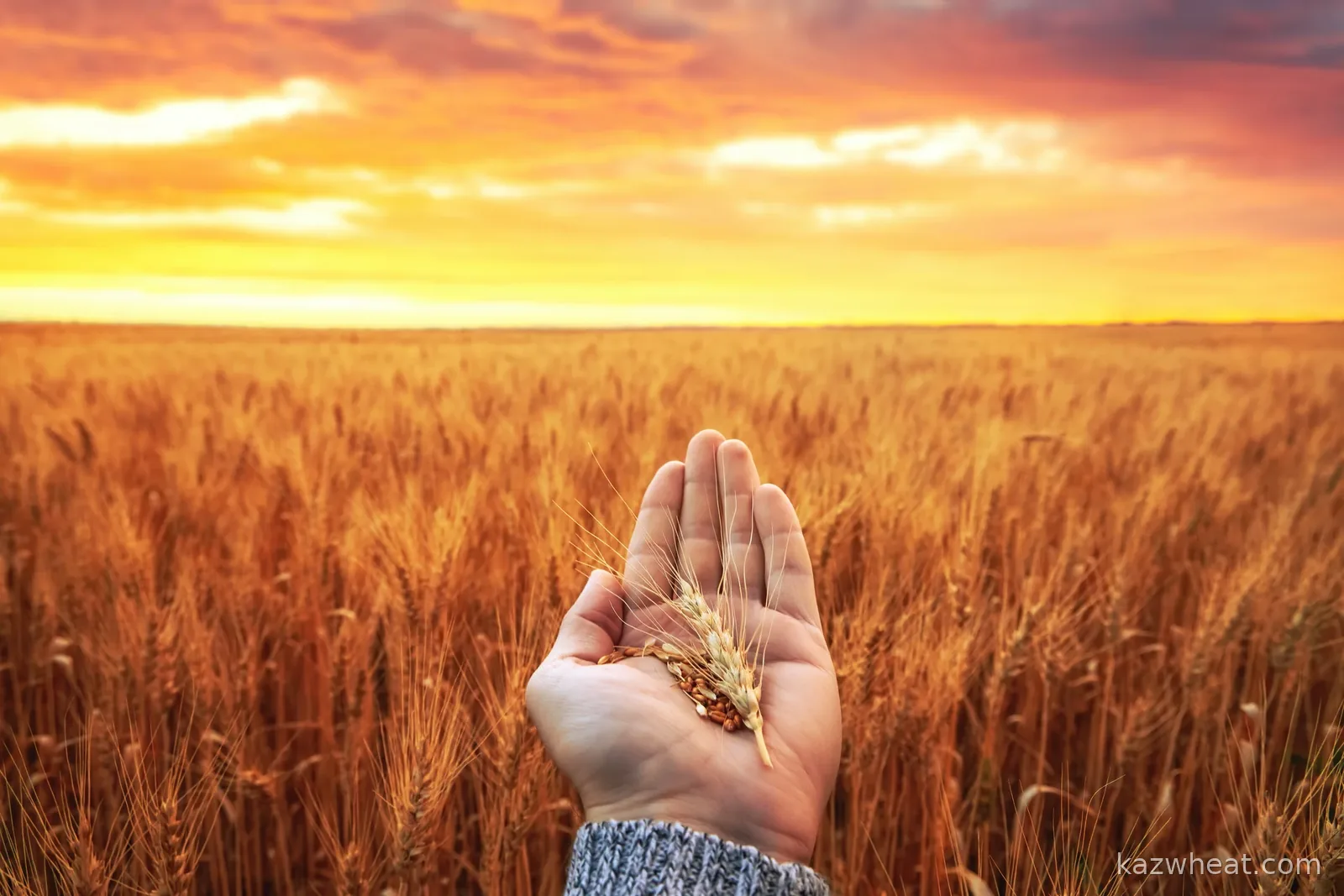
04Autumn onwards
Grain moves into elevators and onto the railways, ready for domestic mills and buyers across Central Asia and beyond.
06 / Wheat and quality
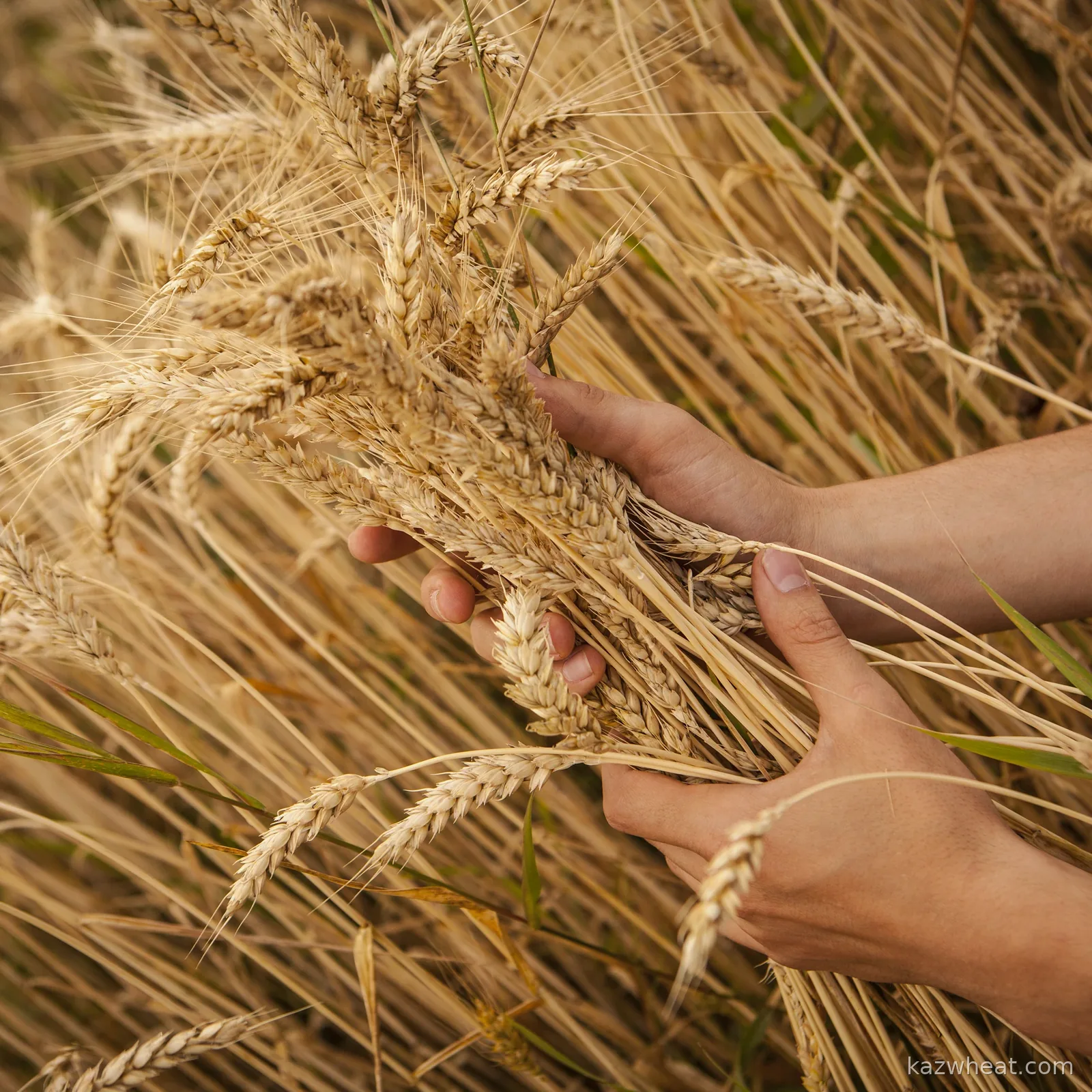
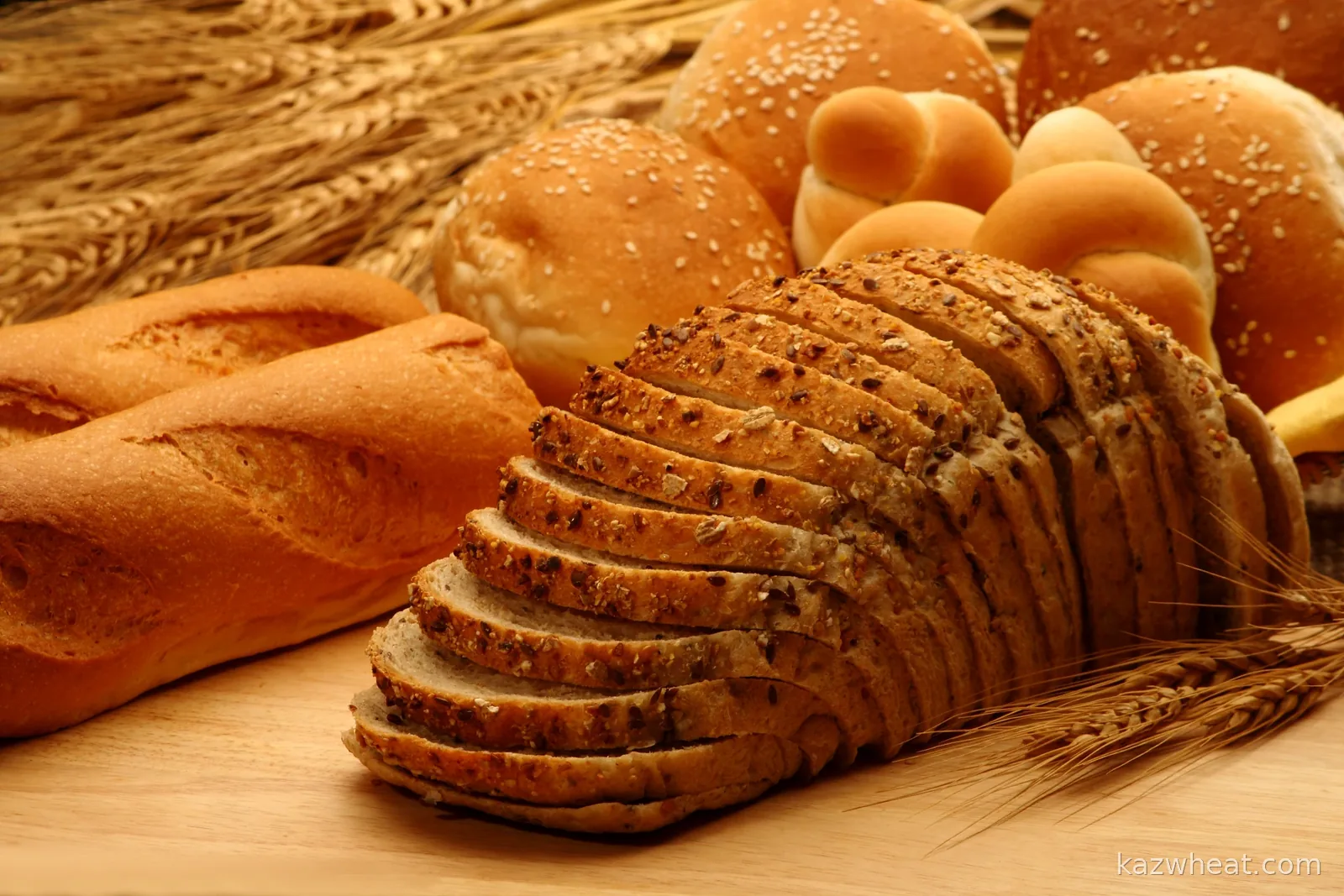
Wheat quality determines how grain is classified, processed, stored and traded. These are the measurements mills and buyers look at first.
The share of protein in the grain. Higher protein wheat makes stronger bread flour.
How much gluten the flour forms, and how elastic it is. It decides how well a dough holds its shape.
Water left in the grain. Too much and it won't store safely, so it's checked at every handover.
A test of enzyme activity in seconds. Low numbers point to sprouting, which weakens baking quality.

07 / Explore
Wheat types, grades and the tests behind them.
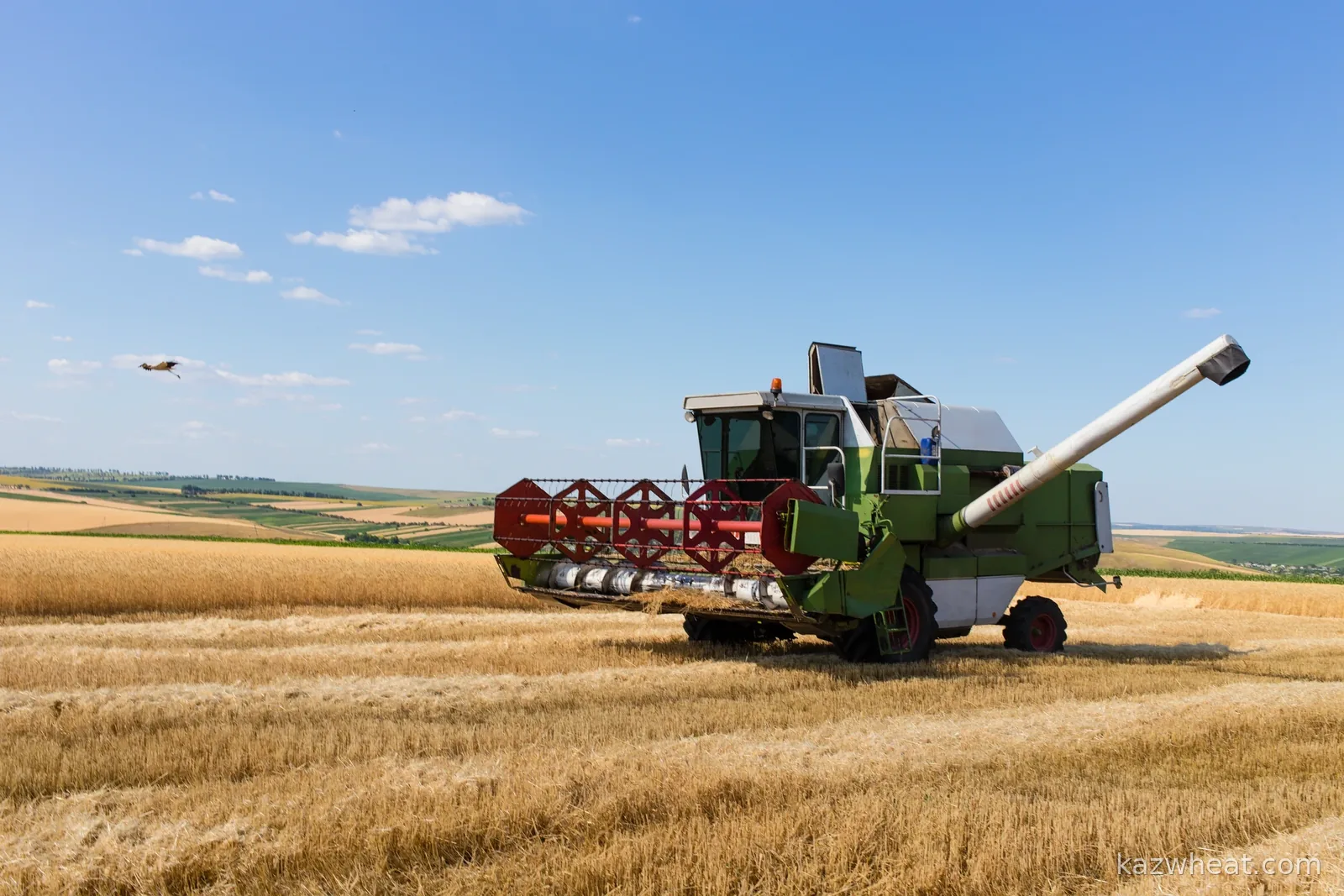
The northern grain belt, region by region.
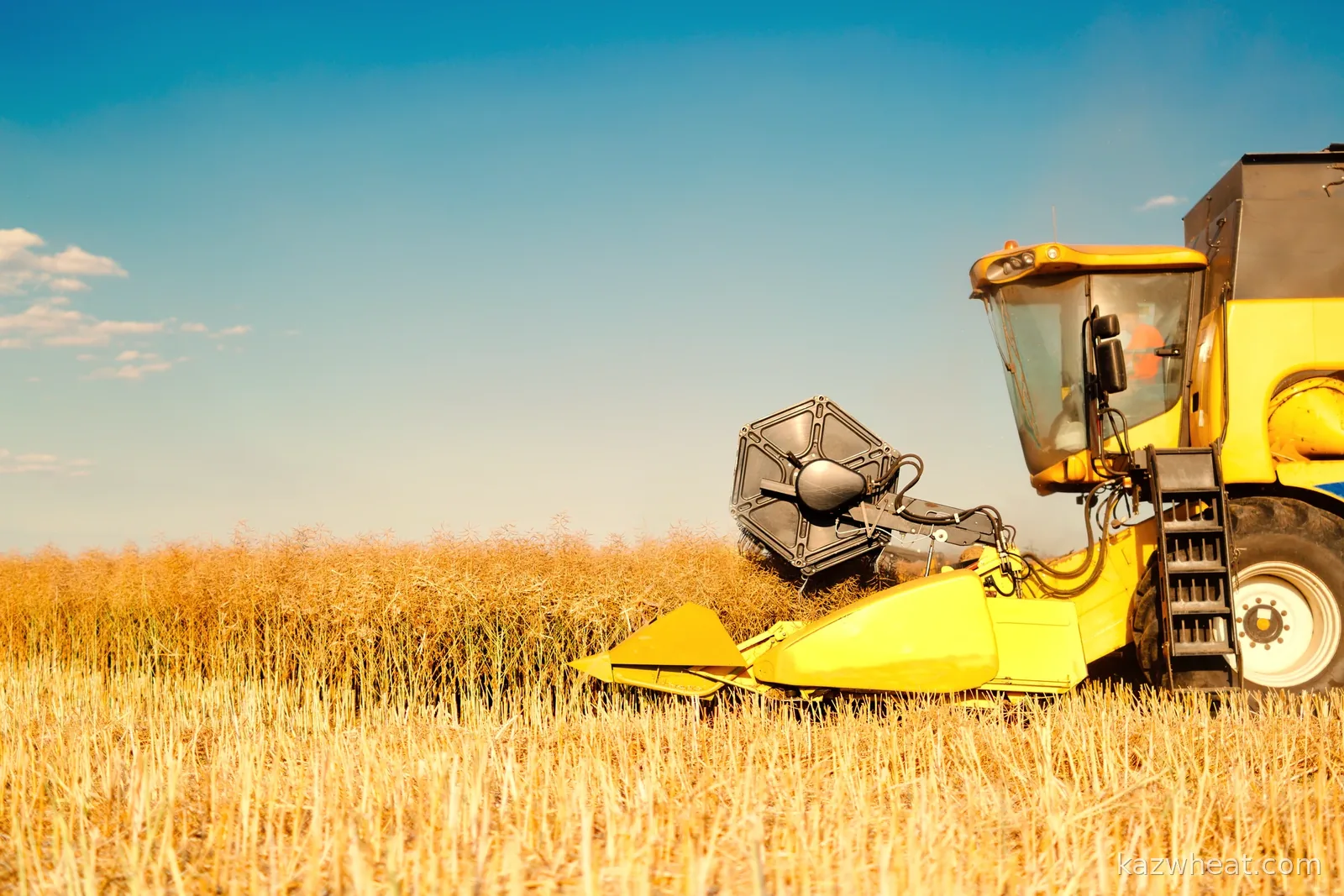
Railways, border crossings and trade corridors.
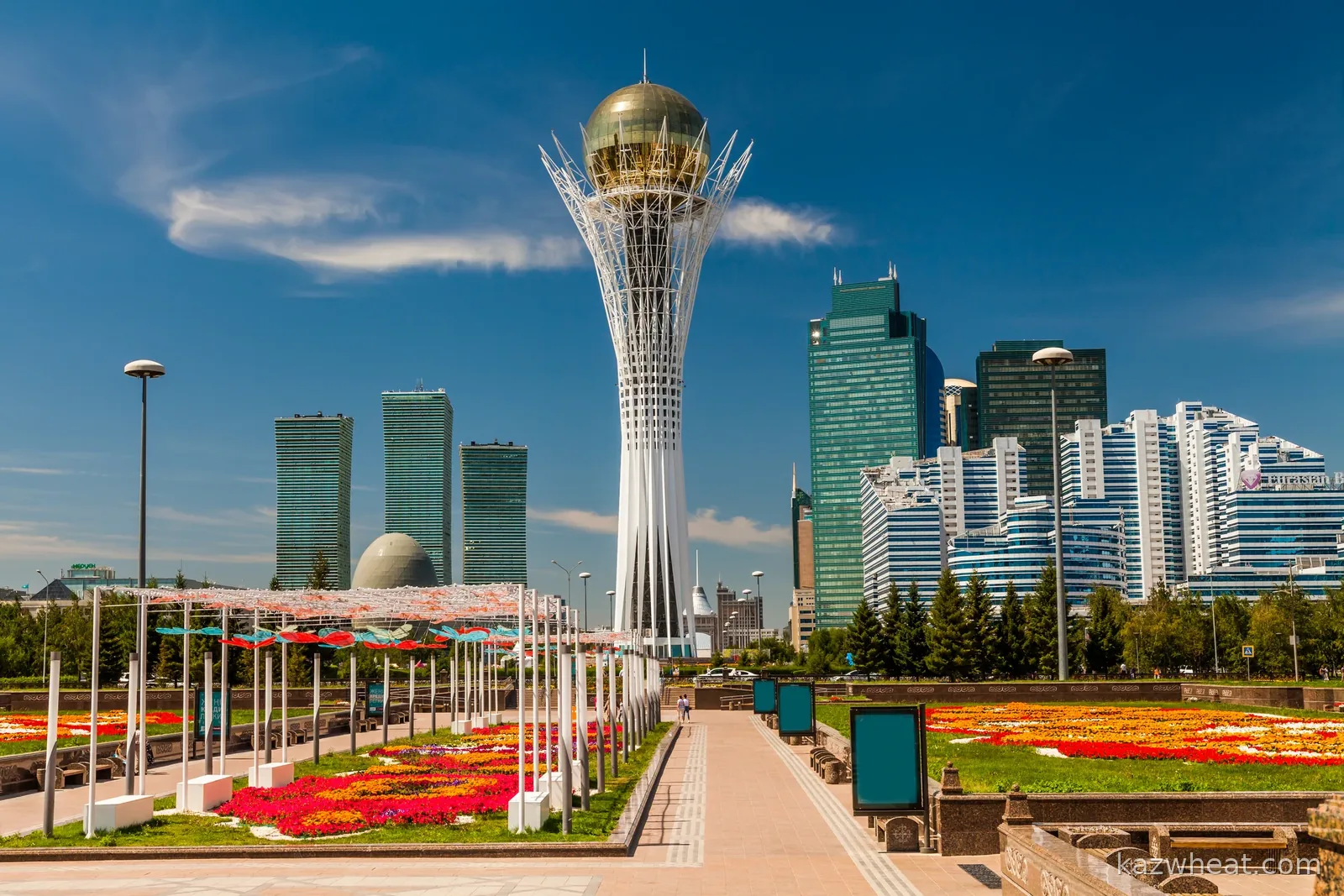
Production, exports and forecasts, with sources.
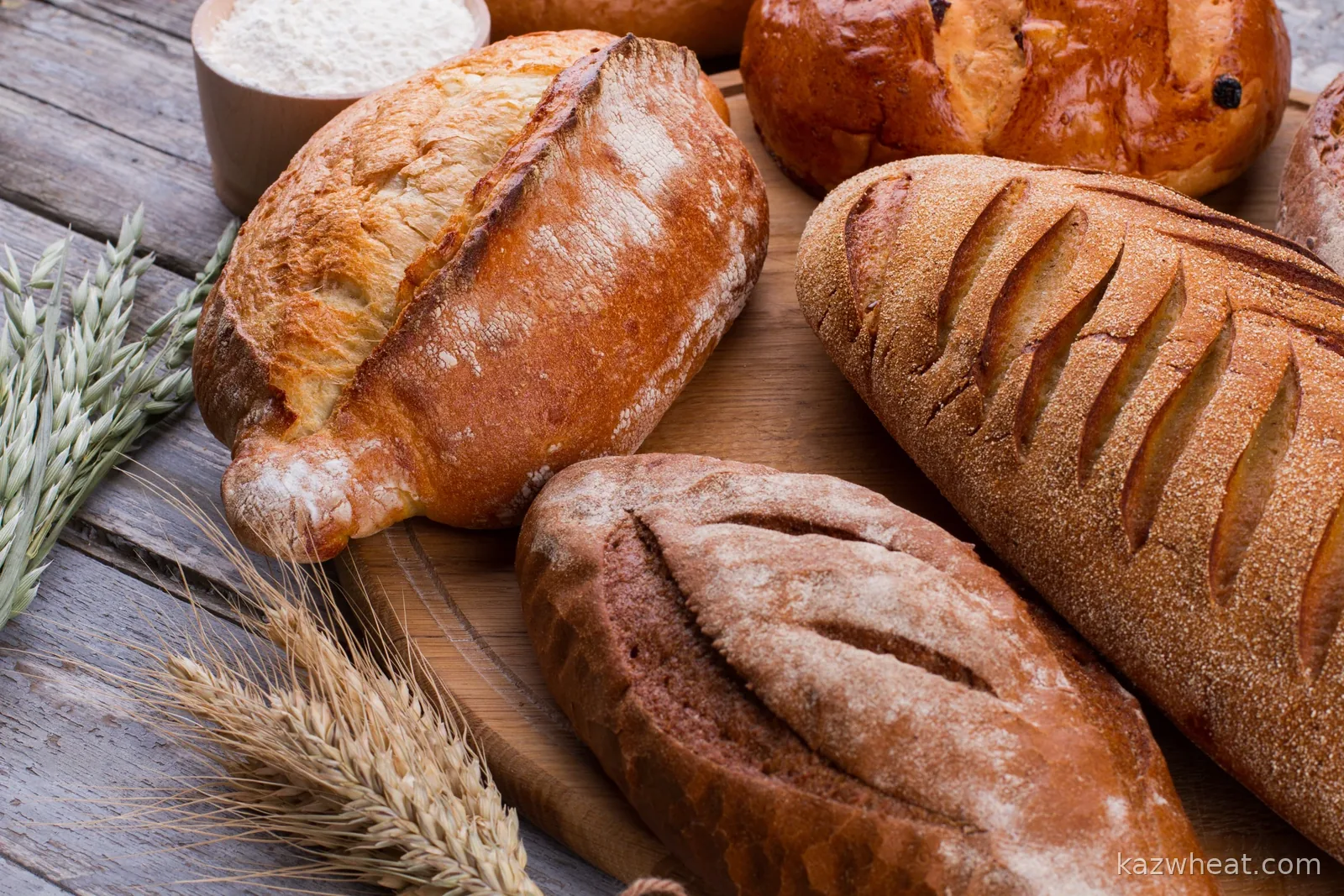
Research and analysis on Kazakhstan's grain.
Who we are, and how we source our data.